
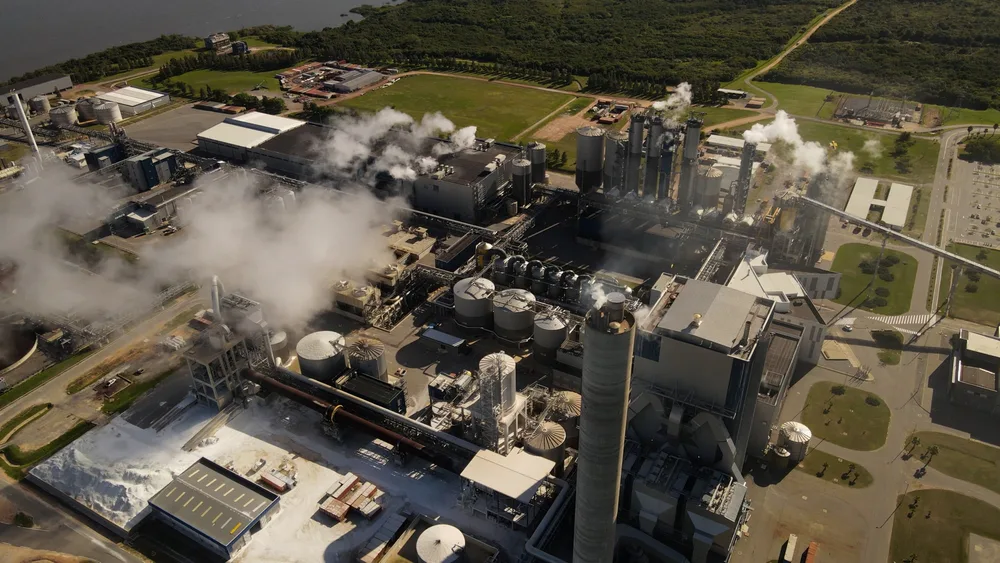
Pulp and Paper
Oxygen supply planning for pulp and paper operations.
Pulp and paper oxygen projects should start with the process objective, use point, and integration scope before supply equipment is selected.
Why teams start looking
Common reasons teams begin reviewing oxygen supply
- A process engineer is reviewing oxygen use in a mill or treatment process.
- Delivered oxygen logistics or storage needs comparison with generation.
- A project requires clear equipment, controls, and documentation inputs.
- Maintenance, backup, and service responsibilities need to be planned before startup.

Define the oxygen need
Build a shared picture of the requirement
A complete intake captures what oxygen is for, how much is needed, when it is needed, and what the site can support. Use this as a starting point for your internal team and for Benchmark Oxygen Solutions.
- Process objective
- Oxygen use point
- Demand profile and variability
- Pressure and purity requirements
- Process integrator or engineer
- Site utilities and space
- Backup and redundancy
- Controls and documentation
Compare supply strategies
No single answer fits every site
Delivered oxygen
Retain delivered supply where logistics and operating model fit.
On-site generation
Scope generation to defined demand and process requirements.
Hybrid supply
Use stored or delivered backup where continuity requires it.
How Benchmark Oxygen Solutions works with the buying group
A long buying cycle, with one consistent set of answers
Use point, demand, and process objective.
Reliability, maintenance, and operator workflow.
Equipment scope, integration, and approvals.
Supply model and support requirements.
Service and ownership plan
Plan support before startup, not after
Service and maintenance
A planned maintenance approach that fits the site, the access window, and the on-site team's capability.
Spare parts
Critical spares planned around lead times, criticality, and operating profile.
Operating visibility
Remote diagnostics and alarm handling where available, with a clear escalation path.
Engineering and approvals
Documentation, FAT, and jurisdictional readiness
Benchmark Oxygen Solutions supports the oxygen-generation scope. Process performance, savings, production, chemical-use, energy, and environmental outcomes must be validated for the specific site.
This page intentionally avoids process, savings, production, energy, chemical-use, or environmental performance claims.
Build the internal business case
Give each stakeholder the next practical step
Site-specific oxygen business case
Organize assumptions for demand, supply model, backup, service, implementation timing, and internal decision makers.
On-site vs delivered oxygen cost worksheet
Compare supply strategies with site-specific inputs instead of assuming one option always wins.
Requirements and specifications path
Capture demand, site, controls, documentation, and approval inputs before equipment selection.
Implementation and commissioning timeline
Plan site readiness, installation coordination, startup, training, and ownership transition expectations.
Backup and redundancy plan
Define continuity, stored backup, alarms, escalation, and maintenance windows around the risk profile.
Service and spare-parts plan
Review maintenance, spares, support responsibilities, and response expectations before startup.
Final equipment selection, specifications, economics, backup design, and implementation plan should be reviewed against the specific site and buying group.
Request an Oxygen ReviewRelated resources
Use these alongside your project team
Plan the right pulp and paper oxygen strategy.
Start with a structured Oxygen Review. We will work through the demand, the site, and the supply strategy together.